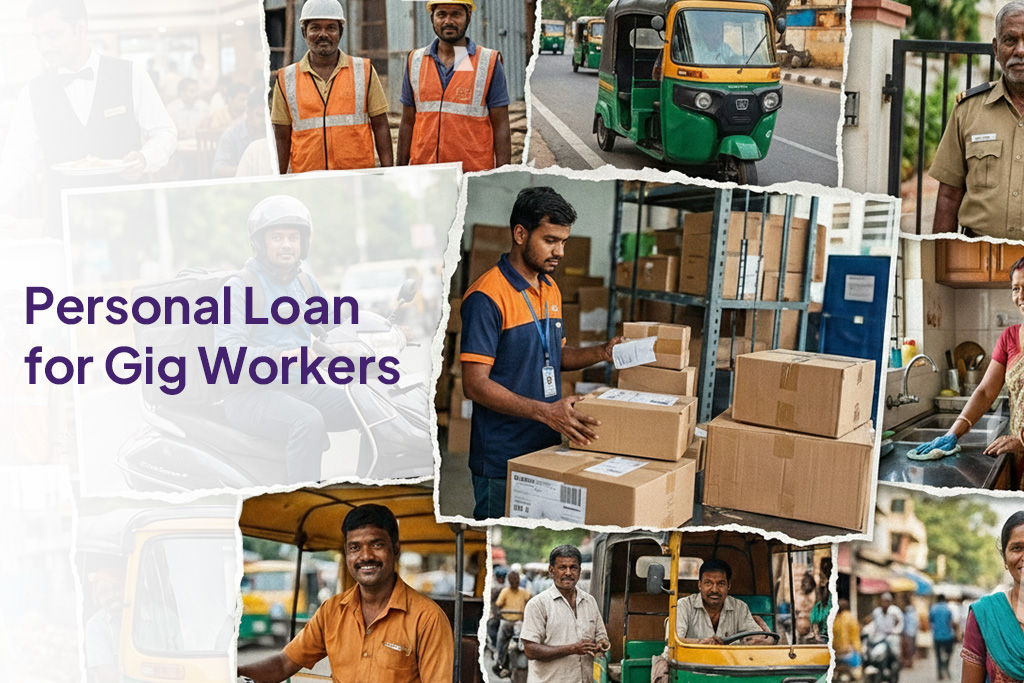
Understanding Personal Loans for Gig Workers
Personal loan for gig workers has become increasingly important as gig work such as freelancing, delivery services, content creation, and ride-hailing continues to grow as a mainstream livelihood. Yet, many gig workers still face challenges in securing loans because they don’t have traditional salary slips or fixed employment contracts, making it harder to prove stable income to lenders.
Fortunately, lenders now increasingly recognise this shift. Several allow gig workers to apply for instant personal loan offers by accepting alternate income verification methods like bank statements, ITRs, or transactional history instead of traditional salary slips.
This opens up opportunities for flexible, collateral-free credit that matches the unpredictable income patterns typical of gig work.
Who Counts as a Gig Worker?
Gig workers include those who earn through flexible, project-based, commission-based or freelance engagements, for example:
- Delivery partners, ride-hail drivers, or courier agents
- Freelancers such as writers, designers, digital marketers, consultants
- Part-time professionals working through platforms or short-term contracts
- Self-employed individuals with variable monthly income
In short, anyone working independently, without a fixed salary or full-time employer contract, qualifies as a gig worker when applying for a personal loan.
Why Gig Workers Need Personal Loans
Gig workers often have irregular cash flows. They may face:
- Unexpected expenses (medical, repairs, travel)
- Need for working capital (buying equipment, tools, raw materials)
- Cash-flow gaps between orders or contracts
- Financial emergencies during non-busy months
Because traditional loans typically require stable income proof, gig workers are often denied, even though they may earn decently over time. Flexible personal loans bridge this gap and offer essential financial support when needed.
Challenges Gig Workers Face During Loan Approval
Despite evolving lending norms, gig workers still face hurdles:
- Lack of salary slips or formal employment documents
- Irregular income — harder for lenders to assess repayment capacity
- Low or no credit history, especially if new to credit
- Higher perceived risk — leading to limited loan amount or higher interest rates
Because of these constraints, many gig workers are hesitant to apply for personal loans, but with the growing number of flexible loan products, things are changing.
Credit Access Is Evolving with the Gig Economy
As India’s gig economy continues to expand in 2026, and lending models are adapting to reflect new income patterns. Fintech-driven lenders are increasingly focusing on cash-flow behaviour rather than fixed salaries, making credit more inclusive for independent workers. This shift is enabling gig workers to access personal loans based on real earning potential, not traditional employment labels.
Simple Income Proof Options Accepted by Lenders
Many lenders and digital platforms now accept alternative proofs of income for gig workers:
- 6–12 months of bank statements showing regular inflows
- Filing of Income Tax Returns (ITR) helps show annual income stability
- GST returns or business invoices (for freelancers running small businesses)
- Payment receipts or platform income summaries (for ride-hail, delivery, freelance gigs)
This flexibility makes personal loans accessible to many who were previously excluded due to lack of formal income proof.
Tips to Increase Chances of Approval
If you’re a gig worker seeking a loan, these tips can strengthen your application:
- Maintain consistent inflow in your bank account over 6–12 months
- Keep transaction records organized & treat your income like a business account
- File ITRs regularly (even if you have variable income)
- Keep other debts low and avoid multiple loan enquiries
- Aim for a decent credit score, above 650–700 helps a lot
- Apply through digital-first lenders or apps that specialise in self-employed/gig income borrowers
Best Loan Options for Gig Workers
Some loan products and platforms are specifically tailored for gig or self-employed individuals:
- Digital personal loan apps offering fast approvals with minimal documentation
- Lenders allowing instant personal loan without CIBIL score or salary slip, by evaluating alternate income proofs
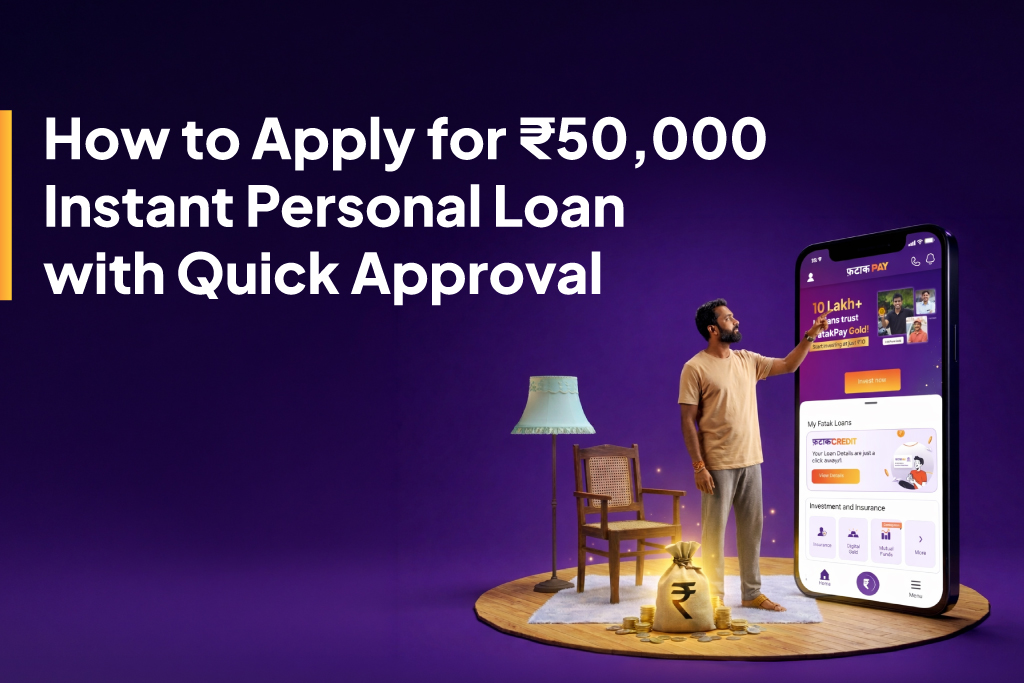
- NBFCs and fintech firms offering small-to-medium personal loans (₹50,000 – ₹5 lakh) even for irregular income borrowers
Such flexible products bridge the gap for gig workers who need credit but don’t fit traditional loan criteria.
Step-by-Step Application Process
Here’s how a gig worker can apply for a personal loan:
- Check eligibility and documentation: get Aadhaar, PAN, recent bank statements, address proof.
- Choose a digital-first platform or lender specialised for self-employed/gig workers.
- Submit alternate income proof: bank statements, ITR, GST returns, invoices.
- Get instant verification and approval: many platforms offer quick digital KYC and processing.
- Loan amount credited to bank account: personal loans are unsecured and flexible.
- Plan repayment carefully: ensure your cash flows can handle EMI amounts.
This process is largely online & convenient for users without formal salary slips or fixed employment records.
Unlock Credit Without Traditional Income Proof –
Try FatakPay
Don’t let irregular income or lack of salary slips hold you back. With flexible loan products tailored for gig workers, FatakPay helps you access credit when you need it, quickly, securely, and responsibly.
Apply now on FatakPay to get instant personal loan support even without a formal salary slip.
FAQs
Q1. Can gig workers get a personal loan without a salary slip?
Yes, many lenders accept alternate proofs like bank statements, ITR, GST or bank inflows to evaluate income.
Q2. Do I need a good credit score to apply?
A good credit score (650–700+) improves your chances of approval, but some digital lenders offer loans to first-time borrowers or those with limited history.
Q3. What loan amount can I get as a gig worker?
Depending on income proof and repayment capacity, many gig workers get approved for ₹50,000 up to ₹5 lakh.
Q4. Is the application process digital and quick?
Yes. Digital platforms allow online KYC and instant approval, funds can be credited within minutes.
Q5. What repayment tenure should I choose?
It depends on your monthly cash flow, so always pick an EMI you can comfortably manage even during lean months.
| Personal Loans by City | ||||
|---|---|---|---|---|
| Personal Loan Bengaluru | Personal Loan Thane | Personal Loan Mumbai | Personal Loan Hyderabad | |
| Personal Loan Pune | Personal Loan Surat | Personal Loan Coimbatore | Personal Loan Delhi | |
| Personal Loans by Amount | ₹60,000 Personal Loan | ₹3 Lakh Personal Loan | ₹5 Lakh Personal Loan |
|---|