New Year’s resolutions give you the perfect chance to reset, rethink, and realign your finances. Whether 2025 brought growth, challenges, or important lessons, 2026 offers a clean slate to make smarter money decisions. Setting New Year financial goals isn’t about drastic changes it’s about consistent, realistic steps that strengthen your long-term financial health. These financial resolutions for 2026 can help you save better, invest wisely, and feel more confident about your money.
Assess and Reflect on Your 2025 Financial Journey
Before planning ahead, look back.
Review your income, expenses, savings, investments, and debts from 2025. Ask yourself:
- Did you stick to your budget?
- Were you able to save consistently?
- Did unexpected expenses derail your plans?
Understanding what worked, and what didn’t, helps you set more achievable New Year money goals for 2026.
Set Clear Financial Goals for 2026
Vague goals like “save more” rarely work. Instead, set clear and measurable targets:
- Save ₹50,000 by June
- Reduce outstanding debt by 20%
- Build a 6-month emergency fund
- Start investing regularly
Clear goals provide direction and motivation, especially when aligned with your investment goals 2026.
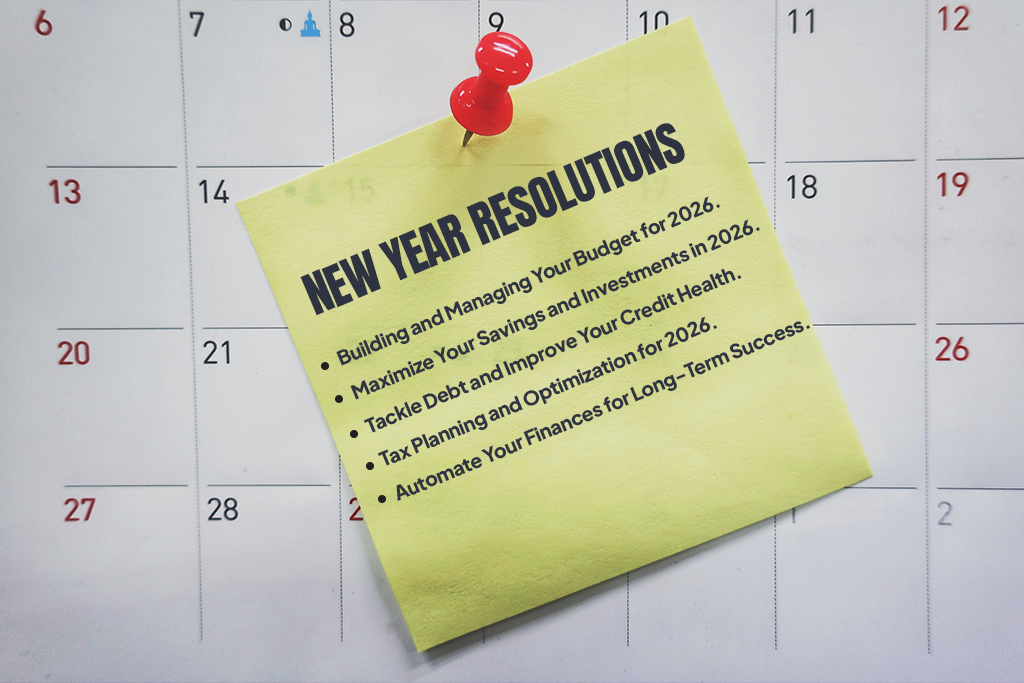
Building and Managing Your Budget for 2026
A practical budget is the foundation of financial success.
Break your income into categories:
- Essentials (rent, food, utilities)
- Financial commitments (EMIs, insurance)
- Savings and investments
- Lifestyle spending
Review and adjust your budget monthly to stay flexible while keeping your financial priorities intact.
Maximize Your Savings and Investments in 2026
Saving alone is not enough, your money should also grow.
Consider:
- Automating monthly savings
- Diversifying investments across low-risk and growth assets
- Increasing contributions when your income rises
Early and consistent investing makes achieving long-term goals much easier. If you’re starting systematic investments this year, you can also plan your savings with a SIP calculator to estimate potential returns and align contributions with your 2026 financial targets.
Tackle Debt and Improve Your Credit Health
High-interest debt can hold you back financially.
For 2026:
- Prioritise clearing expensive loans first
- Avoid unnecessary credit usage
- Pay EMIs and bills on time
- Monitor your credit score regularly
A healthy credit profile improves loan eligibility and lowers borrowing costs. It is also wise to check your credit score at the start of the year so you understand your financial standing and can work on improving it if needed.
Tax Planning and Optimization for 2026
Proactive tax planning can save you a significant amount of money.
Plan early to:
- Understand eligible deductions
- Align tax-saving investments with your financial goals
- Avoid last-minute decisions
Effective planning helps optimize cash flow while keeping you compliant.
Automate Your Finances for Long-Term Success
Automation removes emotion and inconsistency from money management.
Automate:
- Savings transfers
- Investment contributions
- Bill and EMI payments
This ensures discipline, reduces missed payments, and supports long-term financial stability.
Review and Update Your Insurance Coverage
Life changes and your insurance should keep up.
Reassess your:
- Health insurance
- Life insurance
- Accident or critical illness cover
Adequate coverage protects your finances from sudden setbacks and supports overall financial security.
Plan for Financial Emergencies and Unexpected Events
Unexpected expenses are inevitable.
Aim to:
- Build an emergency fund covering 3–6 months of expenses
- Keep funds easily accessible
- Avoid using credit for emergencies whenever possible
This cushion ensures that surprises don’t derail your saving money for the 2026 plan. If borrowing becomes necessary, make sure to apply for personal loan responsibly, considering repayment capacity and long-term financial impact.
Leverage Smart Digital Tools for Money Management in 2026
As financial technology continues to evolve, 2026 is the perfect year to turn your New Year’s Resolutions into smarter money habits. From UPI-based payments and automated savings to real-time expense tracking and goal-based insights, fintech platforms are making financial planning simpler and more transparent than ever. Managing your spending, investments, and bills through a single app helps you stay disciplined, make faster financial decisions, and transform everyday money actions into long-term financial success.
Conclusion
2026 doesn’t need dramatic financial changes, it needs consistent, thoughtful decisions. By setting realistic goals, staying disciplined, and reviewing your progress regularly, you can turn your financial resolutions for 2026 into lasting habits.
Remember, the best time to start improving your finances is always now.
FAQs
1. Why are New Year financial goals important?
They provide structure, motivation, and clarity for managing money effectively throughout the year.
2. How many financial resolutions should I set?
Focus on 3–5 realistic goals to avoid feeling overwhelmed.
3. Should I prioritise saving or investing in 2026?
Both matter. Build a safety net first, then invest for long-term growth.
4. How often should I review my financial goals?
Quarterly reviews help you stay on track and adjust when needed.
5. What’s the best way to stay consistent with money goals?
Automation, regular reviews, and realistic planning are key to consistency.
Ready to make your New Year’s financial resolutions a reality? Take control of your money, manage expenses smarter, and stay financially confident with the FatakPay app. Download now and start your journey toward a better financial 2026!
| Instant Loans by Amount | |||
|---|---|---|---|
| ₹1500 Instant Loan | ₹2500 Instant Loan | ₹5000 Instant Loan | ₹10000 Instant Loan |
| ₹12500 Instant Loan | ₹15000 Instant Loan | ₹17500 Instant Loan | ₹20000 Instant Loan |