In India, the PAN card is one of the most essential identity documents for financial transactions and tax compliance. Whether you are earning income, investing, opening a bank account, or filing taxes, a PAN card often plays a central role. But what exactly is a PAN card, why is it so important, and how can you apply for one? This guide breaks it all down in simple, clear terms.
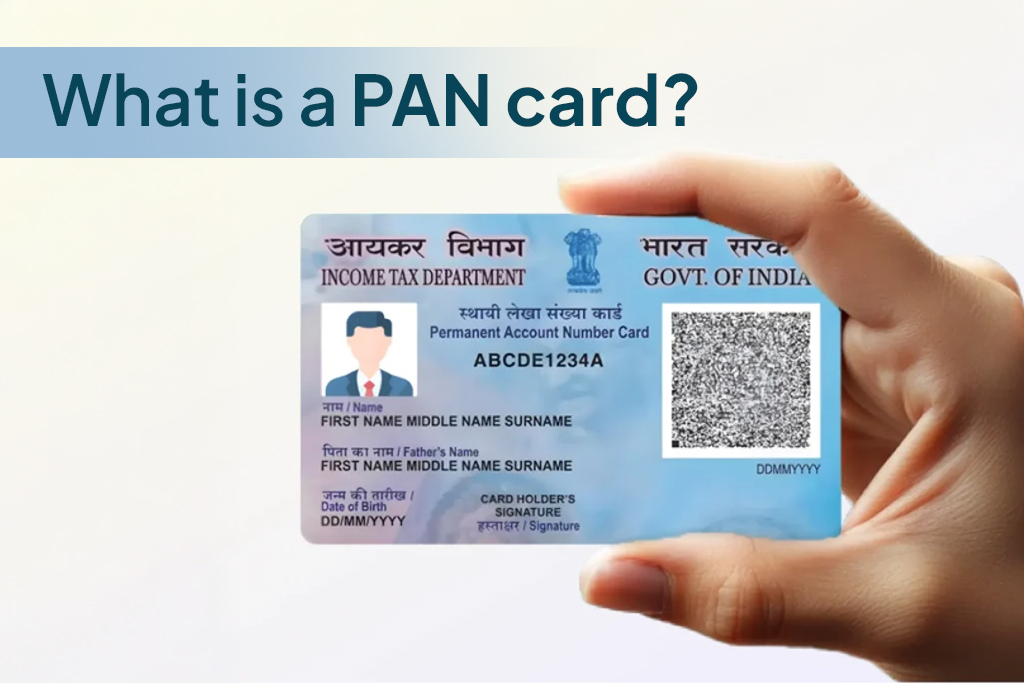
What is a PAN Card?
PAN is also mandatory during loan applications, especially for digital lending platforms. You can apply for a personal loan with PAN to streamline your KYC process, verify your identity, and get faster approval without unnecessary paperwork.
The PAN:
- Is unique to each holder
- Remains valid for life
- Is used widely across financial and government systems
If you’ve ever wondered “What is a PAN card?”, think of it as your permanent financial identity in India.
Why is a PAN Card Important?
The PAN card plays a crucial role in various financial and legal processes:
✔ Tax Filing and Returns
PAN is mandatory for filing income tax returns and tracking tax liabilities.
✔ Linking with Financial Accounts
Banks and financial institutions require PAN for opening savings accounts, investment accounts and mutual funds.
✔ Large Transactions
Transactions above specified limits (e.g., cash deposits, investments, property deals) must be linked with PAN.
✔ Proof of Identity
PAN serves as a widely accepted identity document across many services and verifications.
✔ Preventing Tax Evasion
It helps the government track high-value transactions and ensures transparency in financial activities.
In short, knowing why a PAN card is important can save you from compliance issues and simplify your financial life.
Where is a PAN Card Required?
Some common scenarios where PAN is mandatory:
- Filing Income Tax Returns
- Opening a bank account
- Investing in stocks or mutual funds
- Purchasing property above a specified value
- High-value cash transactions
- Applying for loans and credit cards
- Receiving professional income or business earnings
Without a PAN card, you may face restrictions, higher tax deductions or complications with documentation.
PAN is also mandatory during loan applications, especially for digital lending platforms. Completing personal loan KYC helps lenders verify your identity, assess eligibility, and process loans faster without paperwork delays.
Types of PAN Cards
PAN cards can be issued to:
1. Individuals
Citizens and residents of India
2. Hindu Undivided Families (HUFs)
Registered family entities
3. Companies
Private or public companies
4. Firms/LLPs
Partnership firms or limited liability partnerships
5. Trusts & Associations
Registered trusts or non-profit bodies
Each category has its own application process and documentation, but the underlying PAN card purpose remains the same, unique tax identification.
How to Apply for a PAN Card?
You can apply for a PAN card online or offline. Here’s how:
Online Application
- Visit the NSDL or UTIITSL PAN portal
- Fill in the form (Form 49A for Indian citizens)
- Upload ID & address proof
- Pay the application fee
- Submit and receive an acknowledgment
Offline Application
- Obtain Form 49A from a PAN centre
- Fill and attach required documents
- Submit to an authorised PAN centre
- Track your application using the acknowledgment number
After verification, your PAN card is dispatched to your address.
How to Check PAN Status?
Once you’ve applied, you can check the status online:
- Visit the NSDL or UTIITSL status portal
- Enter the acknowledgment number
- View current status (processing, dispatched, etc.)
Regular tracking helps ensure your application progresses smoothly.
PAN Correction / Update / Reissue
If your personal details change or were incorrectly entered, you can:
- Update name, date of birth, address or other fields
- Correct spelling errors
- Request a reissue of the PAN card
This can be done online via NSDL/UTIITSL portals by submitting correction requests and documents. A small processing fee may apply.
PAN vs Aadhaar – Are They Same?
Though both are identity documents, they serve different purposes:
| Feature | PAN Card | Aadhaar Card |
| Purpose | Tax identification | General identity & residence proof |
| Issuer | Income Tax Department | UIDAI (Unique ID Authority of India) |
| Scope | Financial & tax transactions | Identity and government services |
| Format | 10-digit alphanumeric | 12-digit numeric |
| Linking Requirement | PAN must be linked with Aadhaar for tax filing | Aadhaar is widely used for subsidies, KYC, ID proof |
While both are important, PAN focuses specifically on tax and financial tracking.
Since PAN must be linked with Aadhaar for smooth tax filing and compliance, it’s important to ensure your Aadhaar details are up to date. You can learn how to check Aadhaar linked mobile number and email ID to avoid verification issues during PAN–Aadhaar linking.
Consequences of Not Having a PAN Card
Not possessing a PAN card can lead to:
- Higher TDS (Tax Deducted at Source) on payments
- Unable to open investment or savings accounts
- Difficulties in buying property or high-value assets
- Penalties from the Income Tax Department
- Non-compliance issues when filing tax returns
Having PAN ensures you stay compliant with financial and legal requirements.
Before applying for loans or credit, it’s also wise to check your credit score online. A good credit score combined with a PAN card ensures smoother approvals, better loan offers, and lower interest rates.
Safety & Fraud Awareness
Your PAN card is linked to your financial identity, so safeguarding it is essential:
✔ Do not share PAN details publicly
✔ Beware of phishing calls asking for OTPs or sensitive data
✔ Notify authorities if your card is lost or misused
✔ Use official portals for PAN applications and updates
Vigilance helps protect your personal and financial identity from fraud.
FAQs
1. What is a PAN card?
A PAN card is a Permanent Account Number issued by the Income Tax Department as a unique tax and identity identifier in India.
2. Why is a PAN card important?
It is essential for tax filing, financial transactions, investments, loans and identity proof.
3. How do I apply for a PAN card?
You can apply online via NSDL/UTIITSL portals or offline at PAN centres using Form 49A.
4. Can I update my PAN details?
Yes, you can update or correct PAN details by submitting the relevant request online.
5. Is PAN card the same as Aadhaar?
No. PAN is used for tax and finance, while Aadhaar is a general identity and residency document.
Get Your PAN Card Hassle-Free
A PAN card is fundamental to your financial identity in India.
Apply for your PAN card online today and unlock seamless access to financial services, investments and compliance!
| Personal Loans by City | ||||
|---|---|---|---|---|
| Personal Loan Bengaluru | Personal Loan Thane | Personal Loan Mumbai | Personal Loan Hyderabad | |
| Personal Loan Pune | Personal Loan Surat | Personal Loan Coimbatore | Personal Loan Delhi | |
| Personal Loans by Amount | ₹60,000 Personal Loan | ₹3 Lakh Personal Loan | ₹5 Lakh Personal Loan |
|---|